
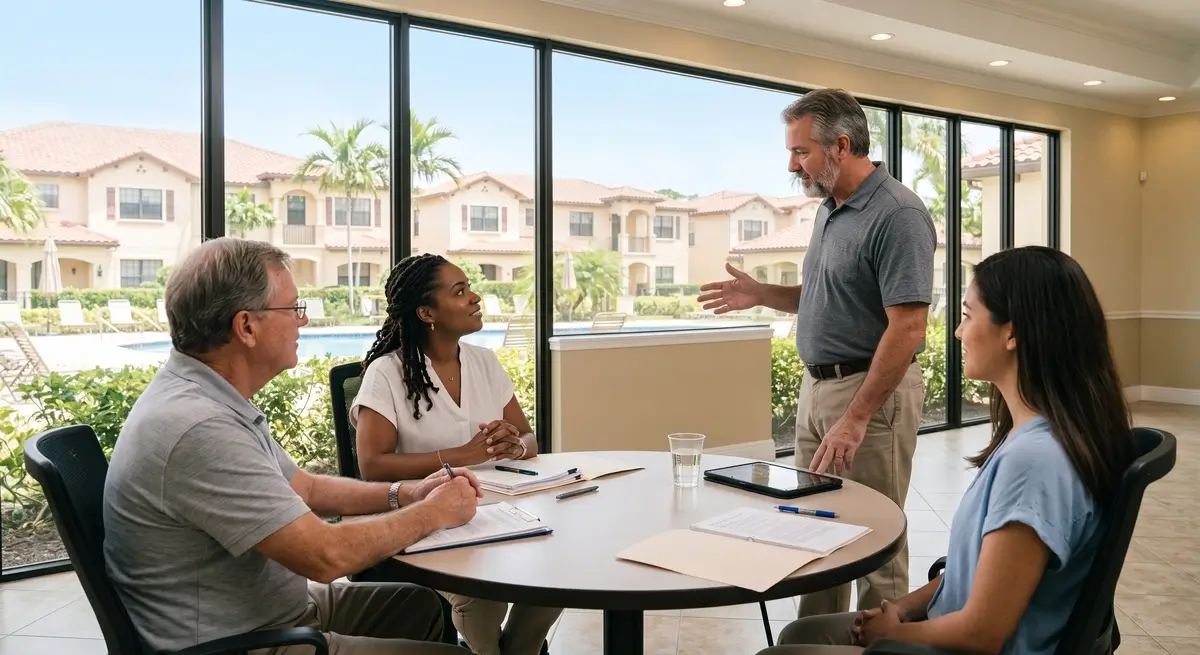
Sitting on a self-managed HOA board in Fort Lauderdale sounds manageable until you're three weeks into reviewing landscaping bids, mediating a fence complaint, and approving a reserve transfer, all before your actual job starts for the day. Volunteer directors take on a workload that resembles full-time property management, minus the training, staff, or paycheck that usually comes with it.
This pattern is far from rare in Florida, where self-management is common among homeowner associations. The volunteers who keep these communities running aren't lacking ability. They're stretched thin by constant, unrelated decisions that never seem to slow down.
Key Takeaways
- Volunteer boards wear down from handling too many unrelated decisions with limited time and support.
- Financial reviews, vendor selection, and rule enforcement are where the strain shows up earliest.
- Waiting too long on a decision often ends up costing more than acting on it early would have.
- Reliable systems and support structures help boards make sharper decisions with less friction.
- Recognizing fatigue early gives boards room to adjust before burnout takes over.
Why Financial Reviews Drain Boards Faster Than Anything Else
Every invoice, transfer, and assessment gets the same level of scrutiny, whether or not the board members reviewing it have any financial background.
A single meeting might involve checking a dozen invoices against contract terms, confirming completed work, and deciding what fits the budget. None of that takes long on its own. Stretched across months, it becomes a level of financial oversight most volunteers never expected to take on.
Confidence plays a bigger role here than people assume. Boards that trust their numbers move through approvals quickly. Boards that second-guess their financial reports tend to stall, and that hesitation can push vendors to ask for deposits upfront or walk away from future bids entirely. Reviewing reliable HOA reports before a meeting gives boards a stronger starting point and cuts down on the back-and-forth that eats up everyone's energy.
What Happens When Reserve Funding Gets Pushed Back
Boards often delay reserve decisions to avoid pushback over raising assessments. The problem is that waiting doesn't make the decision any easier. It shrinks the funding window and raises the odds of a special assessment landing on residents later.
Vendor Selection Adds Weight Nobody Accounted For
Comparing bids sounds straightforward until you're reading contract fine print after a full workday, trying to figure out which landscaping company actually delivers what they promise. This burden is common because roughly 30% to 40% of HOAs across the country operate without professional management, leaving volunteers to research every vendor decision on their own.
Boards frequently default to the lowest price, not because it's the wisest option, but because it's the easiest one to defend at the next meeting. Fort Lauderdale communities run into this constantly, and the tension point between fairness and speed in vendor decisions often surfaces only after work has already started.
Common triggers that add to vendor fatigue include:
- Comparing bids without a standardized scope of work
- Reviewing insurance and licensing paperwork under time pressure
- Negotiating terms without leverage or comparison data
- Handling vendor complaints on top of an already full agenda
Without a consistent evaluation process in place, every new vendor search starts from zero, carrying the same uncertainty as the last one.
Rule Enforcement Carries a Personal Weight Volunteers Didn't Sign Up For
Sending a violation notice to someone you'll see at the grocery store next week is nothing like sending one from an outside management company. Volunteer boards frequently delay enforcement or apply rules inconsistently to avoid friction with neighbors, and that inconsistency breeds resentment among residents who followed the rules from the start.
When transparency backfires in financial conversations, a similar dynamic plays out in enforcement. Small inconsistencies compound quickly into larger disputes that take far longer to resolve than the original issue.
Does Uneven Enforcement Create Legal Exposure
It can. If residents can show a board applied rules selectively, courts have sided with homeowners in cases where violations weren't documented consistently across the community.
What Burnout Actually Costs Fort Lauderdale Communities
When a director quits mid-term, the community loses institutional knowledge overnight, and the remaining board members inherit decisions they never had a hand in shaping.
Board turnover carries real consequences, and that visibility is amplified in Florida since 70% of residents attend board meetings regularly, meaning a distracted or inconsistent board rarely goes unnoticed. Long before anyone resigns, fatigue tends to show up in smaller ways:
- Meetings stretch longer as the same decisions get revisited repeatedly
- Simple approvals stall because no one wants to cast the deciding vote
- Communication with residents slows down or stops altogether
Catching these signs early gives a board room to make changes before burnout forces someone out the door.
How Fort Lauderdale Boards Can Cut Down on Decision Volume
Reducing decision fatigue means building repeatable systems for choices that come up again and again, so each new situation doesn't require starting from scratch. Setting a clear reserve funding schedule, standardizing vendor comparisons, and documenting enforcement steps ahead of time all remove decisions from the table before they ever reach a meeting agenda. Strengthening HOA harmony often starts with exactly this kind of groundwork, long before any conflict actually happens.
Good accounting and reporting practices give boards a dependable foundation to build these systems on, so financial decisions don't require reinventing the process every month.
FAQs about Decision Fatigue in Fort Lauderdale, FL HOA Boards
Can decision fatigue put our HOA board at legal risk?
It can. Delaying required decisions or approving actions without proper documentation increases the risk of violating governing documents or Florida HOA requirements. Consistent, well-documented decisions help demonstrate that the board is meeting its fiduciary obligations.
How do we know if our board has shifted into reactive mode?
A common warning sign is when every meeting centers on urgent complaints while long-term projects keep getting pushed back. If most of the board's energy goes toward putting out fires instead of working toward community goals, that shift is worth addressing.
Does high board turnover make decision fatigue worse over time?
Often, yes. New board members need time to learn the governing documents, financial obligations, and active projects. Without clear procedures in place, experienced volunteers end up revisiting old discussions, which slows progress for everyone involved.
Can putting off small decisions actually raise costs down the line?
It can. Minor approvals left unresolved can delay maintenance schedules, contract renewals, and reserve planning. Those delays sometimes turn small issues into larger, more expensive repairs or missed deadlines.
Should every board member weigh in on every single decision?
Not necessarily. Routine matters can often be delegated to committees or handled through established policies, while major financial, legal, or governance decisions stay with the full board. Clear delegation keeps oversight intact without piling on unnecessary discussion.
A Lighter Load Makes for a Steadier Board
Decision fatigue rarely shows up all at once. It builds quietly through shorter tempers, delayed votes, and board members who quietly decide not to run next term again. Catching the pattern early gives your board a real shot at changing course before burnout makes the decision for you.
PMI Broward Sunrise works alongside Fort Lauderdale HOA boards who want to keep their independence without shouldering every decision solo. Our support is built around the exact pressure points covered here, from financial reporting to vendor coordination to enforcement consistency. Take a closer look at our self-managed HOA services to see where PMI Broward Sunrise can lighten the load for your board.
